
Regional Wireless and Battery Certification Ownership: Who Holds the Files Per SKU and Market
Regional wireless and battery certification ownership in a white-label tablet contract usually splits two ways: the OEM factory manages hardware design, the firmware baseline, and compliance testing, while the buyer holds the regional LTE/Wi-Fi and UN38.3 battery certification files per SKU and per destination market. That split decides whether your import clears customs and resells legally. Confirm exactly which reports exist for each SKU and market before you sign.
Why Certification Ownership Matters Before You Import
Radio and battery certification is the gating decision in any private label tablet or custom Android tablet program. Without the right regional LTE/Wi-Fi approval and the UN38.3 battery dossier, a licensed but unapproved build can be held at customs or barred from air freight, so regional certification ownership is a contract asset as real as firmware or tooling. An OEM tablet is assembled to precise specifications by a certified contract manufacturer — often in China or Vietnam — that owns the components, firmware baseline, and compliance testing, while you own the brand and the import [5]. When that testing results in SKU-specific certification files, ownership must be written down.
For product details and project planning, see model-specific compliance information.
Who Owns the Certification Files by Default in an OEM Contract
OEM tablet certification responsibility follows control of the physical build. In a typical OEM engagement the factory manages hardware, the firmware baseline, and the assembly line, and the ordering party controls architecture, software stack, and quality gates [5]. As a consequence, the regional LTE certification ownership in OEM contracts defaults to whoever paid for and commissioned each market’s report.
The practical default is a split: the OEM tablet manufacturer manages compliance testing and produces the certificate, but ownership of the file sits with the buyer for the specific SKU and destination market. This differs from an ODM deal, where the factory owns design and production outright and may retain the certification across buyers [5]. Because a certification applies only to the exact SKU and the exact market report, a single OEM line can carry many separate certificates — each a separate file you may or may not own.
OEM vs ODM: Certification Ownership At a Glance
| Deal type | Who owns design & build | Who runs compliance testing | Who typically holds the certification file per SKU/market |
|---|---|---|---|
| OEM (white label) | Buyer controls architecture, software stack, quality gates; factory executes build | Factory | Buyer, when the buyer commissions and pays for the per-market report |
| ODM (off-the-shelf product) | Factory owns design and production outright | Factory | Factory may retain the certification and license it to multiple buyers |
Decision rule: If you commissioned and paid for the market-specific report for your exact SKU, contract language should name you as the owner of that file. If the report covers the factory’s standard model rather than your variant, treat it as a license, not ownership, and get the transfer of the certificate written into the agreement.
The Three Certification Stacks You Must Itemise Per SKU
Three independent approval stacks attach-to a tablet, and each must be itemised per SKU:
| Stack | What it approves | Where it matters |
|---|---|---|
| Radio certification (FCC, CE, ISED, band approvals) | Transmitted power and frequencies for a specific build | Destination market customs and resale |
| Battery transport (UN38.3) | Safe air/sea shipment of the specific battery pack | Freight and logistics, not retail sale |
| Radio band file per market | Regional frequency bands for that SKU | Cellular connectivity in the target country |
Suppliers commonly list compliance among their capabilities — for example, rugged tablet ODM lines advertise IP67 and Wi-Fi/Bluetooth conformance [2], and white-label programs cite MIL-STD-810H reliability standards [1]. Marketing claims are not the same as a transferable certificate, so verify each file exists for your exact SKU and market.
Radio Certification: FCC, CE, ISED and Market-Specific Bands
For regional LTE certification in OEM contracts, the destination market defines the approval. A white-label buyer needs FCC in the United States, CE in the EU, ISED in Canada, plus market-specific wireless approvals for other territories [4]. Regional frequency bands must be matched to the target country’s spectrum, and import documentation must be ready for each destination [4].
| Market | Typical radio certificate you need | Where the report applies |
|---|---|---|
| United States | FCC | Customs clearance and retail resale |
| European Union | CE / RED | Customs clearance and retail resale |
| Canada | ISED | Customs clearance and retail resale |
| Other territories | Market-specific wireless approval | Destination-market customs and connectivity |
Each certification applies only to the exact SKU and the destination-market report — never to every model in a line. Makers serving education and retail brands secure regional certifications such as FCC and CE per program, which is why compliance handling is treated as a per-country service, not a one-time approval [3]. Confirm the file names the precise variant and market before you rely on it.
Battery Transport: Why UN38.3 Is a Shipping File, Not a Sales Claim
For UN38.3 battery certification tablets, the dossier governs air and international transport of the battery pack, not a point-of-sale safety mark. Transport approval attaches to a specific battery pack and model, so a brand line covering several builds needs several separate UN38.3 dossiers.
Treat the UN38.3 as a logistics file: your freight forwarder will ask for it before accepting a shipment, and it must match the battery inside the exact SKU you ship. If the battery is revised or the pack changes, the previous dossier no longer covers the new build. Battery transport rules sit alongside, not instead of, the regional radio and Wi-Fi approvals that get your device on the shelf.
Contract Ownership Checklist: Six Questions to Ask Before Signing
Regional wireless and battery certification ownership is spelled out in contract terms, so audit the agreement before signing. Work through these six questions for the private label tablet compliance ownership of your program:
- Which reports exist for this SKU and market? Get the exact certificate numbers, not a capability list.
- Who holds the radio band file? Confirm you own — not just license — the regional LTE/Wi-Fi report for each destination.
- Who holds the UN38.3 dossier? Verify it names your battery pack and SKU, with transfer in writing.
- Are the files transferable? If you switch import channels or carriers, can the certificate move with you?
- What re-test and re-cert costs apply for a new market or band? A new destination means new approvals, and those charges normally land on the importer.
- What happens on a hardware or battery revision? A changed build invalidates the old certificate, so the contract must state who covers the new test.
Document ownership of the certification files as contract assets, the same way you would firmware or tooling. Suppliers routinely advertise end-to-end compliance support, including FCC, CE, and market-specific certifications managed for each destination country [4], so push back if a partner only promises “certification support” without naming who holds each file.
A Decision Rule for Confirming Ownership Before You Sign
| Scenario | What to do | Contract clause to add |
|---|---|---|
| You commissioned the per-market report for your exact SKU | Request the certificate in your name and keep the original file on file | “Buyer owns the certification files for the design, SKU, and destination markets listed in Attachment A.” |
| The factory’s standard ODM model carries the certificate | Ask whether it can be licensed, renamed, or reassigned to your SKU and brand | State the license scope, markets, and term; get transfer rights in writing |
| A new market or band is added after launch | Budget for new test and re-certification on the importer’s side | “Importer covers all re-test and re-cert costs for new markets and revisions.” |
| Battery or hardware is revised mid-program | Confirm the old dossier no longer covers the new build | “Ownership and coverage of the UN38.3 dossier update on any battery or SKU change.” |
Per-Market and Per-SKU Rules to Confirm Before Import
The hardest rule of tablet certification per SKU and market is that regulatory compliance is not portable. A certification earned for one destination market or one SKU does not automatically cover another, so every new country or variant starts the approval process again. Re-test and re-cert costs therefore sit with whoever owns the import — usually you.
For a practical vendor example, readers can review custom Android tablet factory.
Before your private label tablet contract is finalised, confirm the file inventory, the ownership split, and the re-test terms in writing. The OEM factory owns the compliance testing, but regional wireless and battery certification ownership — per SKU and per market — is a deliverable you must secure and keep on file for the life of the program.
Related guides
- Regional LTE Wi Fi Radio Certification: What Buyers Must Verify Per SKU and Market
- Regional LTE Certification Ownership in OEM
- Regional Wireless Certification per Market
- Sequencing Self Service and Enterprise Tablet: A Scheduling Decision Model
- Sequencing Self Service and Enterprise Tablet
Planning an OEM tablet project?
Share the required screen size, performance, RAM/storage, firmware, branding, certifications, destination market and expected quantity so Wintouch can confirm a suitable configuration and project plan.
- Phone
- +8613922898904
- [email protected]
- +8613922898904
Content reviewed: 2026-08-21.
Evidence confidence
Confidence: Medium. This rating reflects cross-checking 5 sources across 5 independent domains. It measures evidence coverage, not certainty; verify safety-critical work against manufacturer instructions and local requirements.
References
APA 7th edition
- ↑Estonetech. (2026). White Label Tablets & Industrial Computing Services. https://www.estonetech.com/service/white-labeling-services/.
- ↑3Rtablet. (n.d.). OEM Rugged Tablet Pc Odm Manufacturers and Suppliers. Retrieved August 21, 2026, from https://www.3rtablet.com/rugged-tablet-pc-odm/.
- ↑Adreamertech. (n.d.). 5 Tablet Manufacturers Specializing in High-Fidelity OEM. Retrieved August 21, 2026, from https://www.adreamertech.com/NewsDetail/6774008.html.
- ↑Cited 3 timesCustom Mobile Devices. (n.d.). White Labeling & OEM Solutions. Retrieved August 21, 2026, from https://globalphonesolutions.com/white-labeling-and-oem-solutions.
- ↑Cited 3 timesAlibaba. (n.d.). OEM Tablet Guide: How to Choose Wisely in 2024. Retrieved August 21, 2026, from https://electronics.alibaba.com/buyingguides/oem-tablet-guide-what-you-actually-need-to-know.
You should also read:
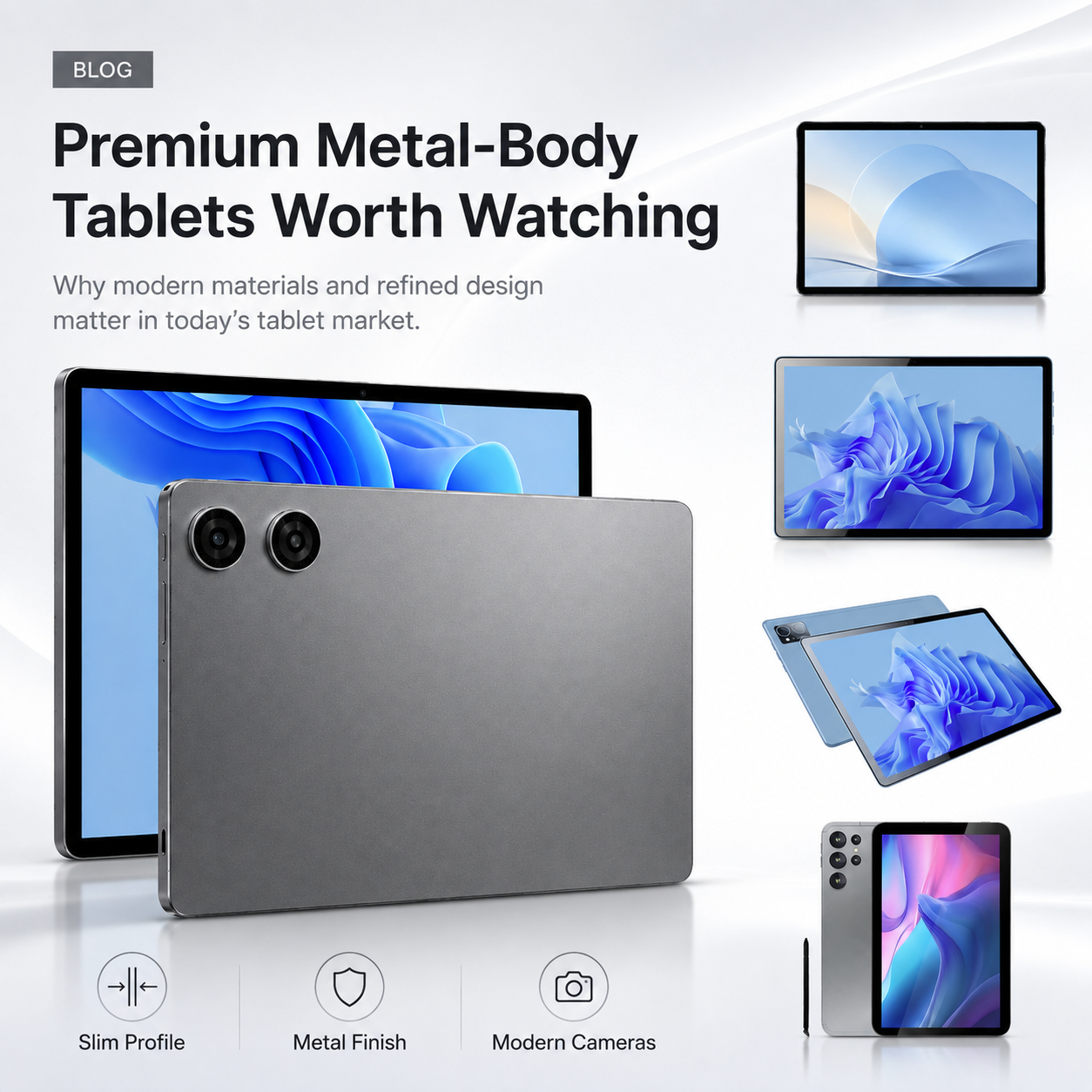
Regional LTE Certification Ownership in OEM
Regional LTE certification ownership in OEM tablet contracts follows control of the physical build. In a typical OEM engagement the OEM factory manages compliance testing and its documentation, while you keep control of software and branding. That split decides who holds the band compliance file…
Continue reading...
Regional LTE Wi Fi Radio Certification: What Buyers Must Verify Per SKU and Market
Regional Lte Wi Fi Radio Certification is the decision framework examined in this guide. The sections below turn sourced evidence into practical comparison criteria without overstating what the available research can prove. Before you commit to a fleet order of OEM tablets, you must verify…
Continue reading...