
Regional LTE Wi Fi Radio Certification: What Buyers Must Verify Per SKU and Market
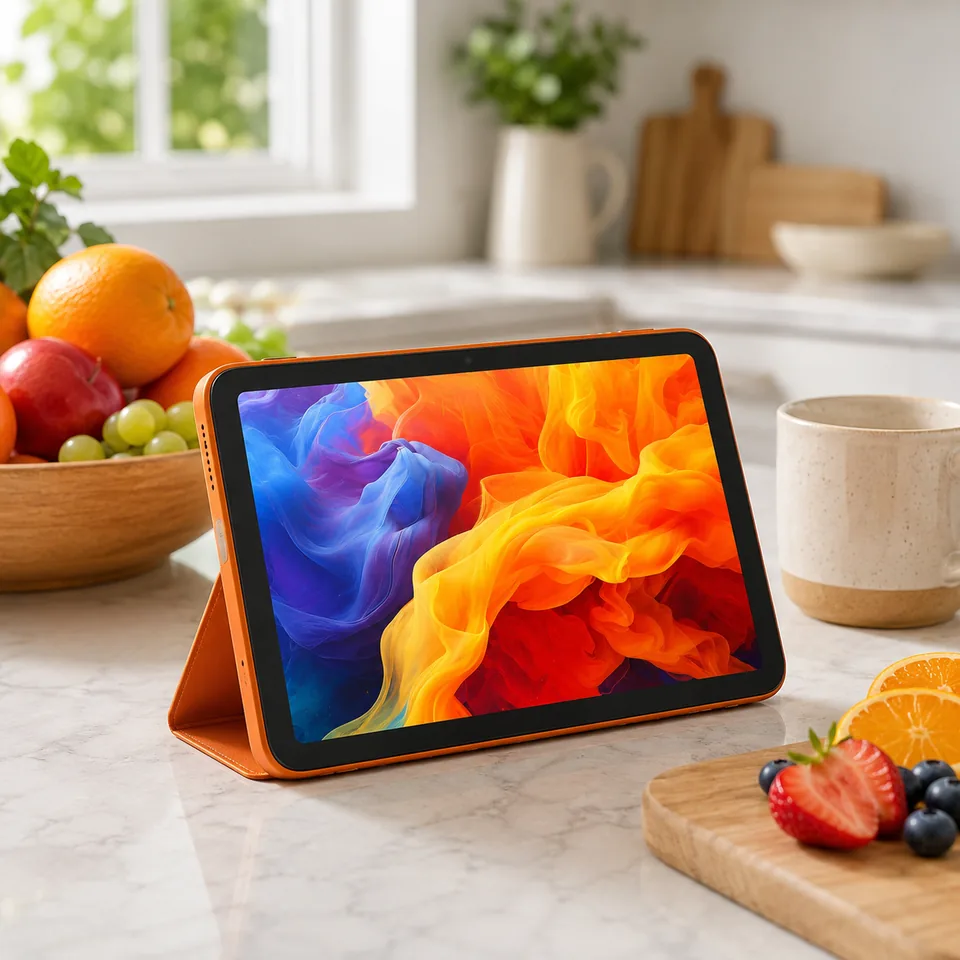
Regional Lte Wi Fi Radio Certification is the decision framework examined in this guide. The sections below turn sourced evidence into practical comparison criteria without overstating what the available research can prove.
Before you commit to a fleet order of OEM tablets, you must verify that LTE and Wi-Fi radio certification applies to the exact SKU and destination market. Radio certification is not a blanket product property: it is granted to a specific model for a specific regulatory jurisdiction. This checklist shows procurement teams how to request the right documents and cross-check them against official public registers, so a supplier’s “we are certified” claim becomes an auditable, dated proof. Work through the six steps in this guide for every model and every target market.
Why Radio Certification Is Verified Per SKU and Per Destination Market
A certificate for one tablet model does not clear a sibling model with a different radio module, antenna design, or even a revised firmware build. Certification is tied to the exact device as an intentional radiator, so any hardware change can invalidate an existing approval. The destination market adds the second axis: FCC authorization governs the United States, CE under the Radio Equipment Directive governs the EU, and national type approvals apply elsewhere, so a tablet certified for one region is not automatically cleared for another. Treat “we are certified” as a starting point, not proof, and verify per SKU and per market before signing a purchase order.
For product details and project planning, see Wintouch OEM tablet manufacturer.
Module-Level vs. Device-Level Certification: What the Distinction Means for Your Order
The distinction between module-level and device-level authorization determines whether your finished tablet is cleared to ship. Buyers who miss it risk customs holds or rejected orders.
| Authentication type | Covers | What it does NOT cover |
|---|---|---|
| Module-level | The radio module as a standalone component, tested to its own standards | The assembled tablet as an intentional radiator in a destination market |
| Device-level | The finished tablet, tested for EMC, RF emissions, and SAR where applicable | Any other build or configuration of the same device |
A module certificate is a component’s ticket, not the device’s. The finished tablet must undergo its own device-level authorization for the specific destination market, because the radio’s behavior changes with the host device’s antennas and layout. Never accept a module certificate as clearance for the assembled product.
The Two Main Radio Certifications Buyers Actually Verify
Two authorizations cover most Western rollouts: FCC approval for the United States and CE under the Radio Equipment Directive for the EU. Verify both at device level for the exact SKU.
FCC Authorization for the United States
FCC certification is required for intentional radiators, and tablets must meet RF emission standards and, in some cases, SAR limits ([1]). The authorization path runs through five steps: determine the applicable FCC rules, select the equipment authorization procedure, complete compliance testing, obtain approval, and label the device ([2]). Request from the OEM:
- The FCC ID grant naming the exact model.
- The FCC ID as printed on the device label, and confirm it matches the grant.
- Cross-check the FCC ID in the [2].
CE Under the Radio Equipment Directive for the EU
CE marking for tablets is self-declared: the supplier holds a technical file with test reports and a Declaration of Conformity. As the importer, you bear the enforcement risk if those documents are absent or incorrect. Request the full RED technical file, the Declaration of Conformity, and the label artwork showing the CE mark, all tied to the exact SKU.
National and Destination-Specific Type Approvals Beyond FCC and CE
FCC and CE are not universal. Regional LTE and Wi-Fi radio certification varies by destination, and the marketplace regulator dictates which approvals apply. For example, India requires BIS certification for tablets before import, beyond any FCC or CE status. Before committing, confirm the current national scheme against the official regulator’s site for your destination market, because requirements change and mutual-recognition agreements vary.
Pre-Shipment Verification Matrix: Documents to Request and Registers to Check
Use this matrix as a fillable procurement deliverable, one row per SKU per market. Every document must be a dated match to the exact model you are shipping.
| Verification step | Document to request | Public register or check to run |
|---|---|---|
| FCC grant matches the label | FCC ID grant listing the exact model and market | [2] |
| EU compliance is documented | RED technical file: test report + Declaration of Conformity | Confirm label and DoC name the same SKU |
| National approval is in place | Destination-market type approval report tied to the SKU | Destination regulator’s type-approval portal |
| Google Mobile Services is licensed | GMS licensing agreement for the exact build | Google Play licensing portal |
| No silent hardware changes | Change-notification log from the OEM | Compare produced build to the certified build |
Decision rule: if the certificate names a module or a sibling model rather than the exact SKU and market, treat it as missing. Requesting a Grant of Authorization from the tablet OEM and verifying the FCC ID on OEM tablets is your due diligence. Any hardware change voids an existing certificate, so re-verify on the production build before dispatch.
Frequently Asked Questions About Tablet Radio Certification
Is FCC certification required for my tablet? Yes, if you sell in the United States. FCC authorization covers intentional radiators under Part 15, and tablets must meet RF emission and, where applicable, SAR limits ([1]). Verify the FCC ID on the label against the FCC database.
Does a sibling model’s certificate apply to my tablet? No. Certification is tied to the exact model, and any hardware change voids the existing approval. A certificate for one SKU or line cannot be assumed to apply to a sibling build.
What does CE marking mean for tablets? CE under the Radio Equipment Directive signals the supplier has self-declared compliance with a technical file of test reports and a Declaration of Conformity. As importer, you hold enforcement risk if those documents are not on file.
How do I check a device’s FCC ID? Cross-check the FCC ID printed on the label against the FCC equipment-authorization database ([2]). The grant must name the exact model.
Does a valid FCC clearance cover other markets? No. FCC authorizes the United States only. India’s BIS and other national schemes apply independently, so verify regional LTE and Wi-Fi radio certification for each destination.
Make Certification Verification Part of Your QC Discipline
Treating radio certification as an extension of export compliance turns a marketing badge into a manufacturing control. A factory that can produce a dated, per-SKU document set for each destination market shows greater QC maturity than one that answers with a blanket assurance. Build the matrix below into your standard procurement workflow, keep each certificate with your quality records, and re-verify on the production build rather than the engineering sample. That single discipline protects your OEM tablet order from customs holds and rejected fleets, and it is the concrete next step to take before your next purchase order is signed.
For product details and project planning, see tablet certification documents.
Related guides
- Edge AI vs Cloud Processing for Kiosks: What Must Run On-Device in 2026
- Sequencing Self Service and Enterprise Tablet: A Scheduling Decision Model
- Sequencing Self Service and Enterprise Tablet
- Balancing Self-Service and Industrial Display Capacity on Shared ODM Lines
Planning an OEM tablet project?
Share the required screen size, performance, RAM/storage, firmware, branding, certifications, destination market and expected quantity so Wintouch can confirm a suitable configuration and project plan.
- Phone
- +8613922898904
- [email protected]
- +8613922898904
Content reviewed: 2026-08-12.
Evidence confidence
Confidence: Medium. This rating reflects cross-checking 2 sources across 2 independent domains. It measures evidence coverage, not certainty; verify safety-critical work against manufacturer instructions and local requirements.
References
APA 7th edition
- ↑Cited 2 timesCompliancetesting. (n.d.). FCC/CE Testing and Certification for Computers & Tablets. Retrieved August 12, 2026, from https://compliancetesting.com/fcc-ce-testing-and-certification-for-computers-tablets/.
- ↑Cited 4 timesFCC. (n.d.). Equipment Authorization. Retrieved August 12, 2026, from https://www.fcc.gov/engineering-technology/laboratory-division/general/equipment-authorization.
You should also read:
Regional Wireless and Battery Certification Ownership: Who Holds the Files Per SKU and Market
Regional wireless and battery certification ownership in a white-label tablet contract usually splits two ways: the OEM factory manages hardware design, the firmware baseline, and compliance testing, while the buyer holds the regional LTE/Wi-Fi and UN38.3 battery certification files per SKU and per destination market.
Continue reading...
Regional LTE Certification Ownership in OEM
Regional LTE certification ownership in OEM tablet contracts follows control of the physical build. In a typical OEM engagement the OEM factory manages compliance testing and its documentation, while you keep control of software and branding. That split decides who holds the band compliance file…
Continue reading...
On-Device vs Cloud AI for Kiosks: What to Run Locally in 2026
On-Device vs Cloud AI for Kiosks: the short answer For kiosks, on-device AI is the default in 2026. Run latency- and privacy-critical inference locally — computer vision, biometrics, voice ordering — and send only non-sensitive, heavy compute to the cloud. The rule is simple: if…
Continue reading...